Ultrasonic flowmeter working principle
Mar 05,2025
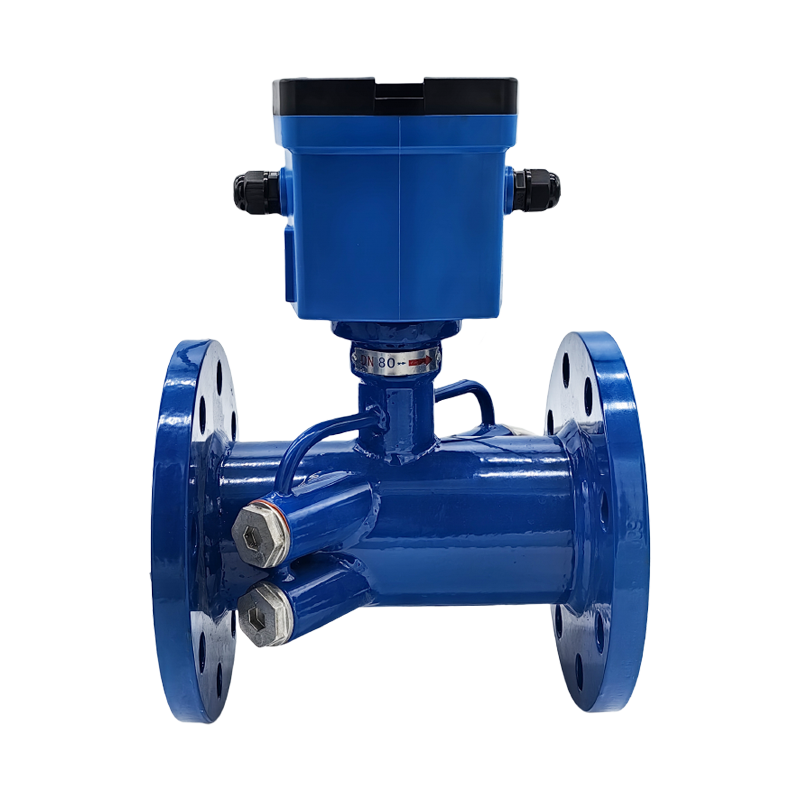
The ultrasonic flowmeter operates on the principle of measuring the time it takes for ultrasonic sound waves to travel through a fluid. This device utilizes two ultrasonic transducers, which function both as transmitters and receivers. When the flowmeter is positioned across the flow direction, one transducer sends an ultrasonic pulse in the direction of the flow, while the other receives it. Simultaneously, the second transducer sends a pulse against the flow direction.
The key measurement taken is the time difference between the two transmitted pulses. If the fluid is stationary, the travel times will be equal. However, when there is flow, the pulse traveling downstream will arrive more quickly than the pulse traveling upstream. By analyzing this time difference and knowing the speed of sound in the fluid, the flow velocity can be calculated.
Ultrasonic flowmeters are advantageous due to their non-invasive nature, high accuracy, and ability to measure a wide range of flow rates. They are commonly used in various applications, including water treatment, oil and gas, and chemical processing, providing reliable data for process control and monitoring.
NEXT: